This passage describes a dramatic moment during the Battle of Cherbourg, which took place in June 1944, just after the D-Day landings. The battle was part of the more extensive Normandy campaign and was crucial for the Allies to secure a deep-water port that could handle large-scale supplies for the ongoing operations in France. The German forces were well-fortified in Cherbourg, and the fighting was fierce, involving entrenched positions, Maginot-style fortifications, and stubborn resistance from the defending troops.
The description of Major General Manton S. Eddy, the commander of the 9th Division, and the tense encounter with the German lieutenant highlights the blend of formality and desperation often seen in military surrenders. The lieutenant’s meticulous surrender process, complete with dipping the flag and the formalized motions, contrasts sharply with the reality of the situation—a German force at the end of its strength, caught in the defensive depths of Cherbourg’s fortifications.
The physical description of General von Schlieben is striking: his appearance reflects not just the weariness of prolonged combat but the psychological and moral toll of the battle. He is described as a “beaten man,” and his disheveled state—”mud-splotched” and “a mass of wrinkles”—suggests that his spirit had already been broken long before his surrender. The comparison of the “starch” in both his appearance and his resolve underscores the profound exhaustion and defeat the German defenders were feeling at this point.
The image of Schlieben, “six feet three, black-helmeted, wearing the Iron Cross,” also evokes the traditional imagery of a German officer, juxtaposed with the visible signs of his failure. The fact that he is leading the surrender, alongside his troops emerging from the tunnel, reinforces the finality of the German position in Cherbourg: resistance is no longer possible, and surrender is inevitable.
This moment marks a critical turning point in the battle, showing both the formalities of military protocol, even in defeat, and the human cost of warfare.
The Context of “The General’s Compliments”
When armies clash, the stakes are high. Generals are not just commanders; they are symbols of their nations’ military might, tasked with making life-and-death decisions on a daily basis. In the heat of battle, the last thing many would expect is a moment of courtesy or politeness between opposing commanders. However, military leaders, often bound by tradition, honor, and a sense of professional respect, have frequently exchanged gestures of courtesy, even in the most brutal conflicts.
These exchanges can take various forms: a salute, a formal written letter, a request for a truce to retrieve the dead or wounded, or, as some accounts have shown, a personal visit to the opposing general’s headquarters. These moments—though brief and sometimes overshadowed by the ferocity of combat—serve as a reminder that generals, despite their roles in warfare, are not immune to the human emotions that shape their decisions. The traditions of courtesy, diplomacy, and respect are as integral to the military world as the strategic maneuvers they plan.
Historical Examples of “The General’s Compliments”
One of the most famous examples of such courtesies came during the American Civil War. Despite the brutality of the conflict, there were moments when generals from both sides would send messages of respect. For example, Union General Ulysses S. Grant and Confederate General Robert E. Lee maintained a level of professionalism and respect for one another, especially when they were forced to meet as part of peace negotiations. Lee’s formal surrender to Grant at Appomattox Court House in 1865—while marking the end of the Civil War—was preceded by a courteous exchange of letters.
Grant, recognizing the hardship and devastation that had already been inflicted upon the Confederate army, extended a generous offer of terms that would allow Confederate soldiers to return home without further suffering. Lee, in turn, responded with gratitude, emphasizing the professionalism and dignity of Grant’s leadership. This exchange was not just a matter of military strategy but a reflection of the respect between two men who understood the horrors of war and the need for closure.
May you also like it:
World Battlefronts: The Generals Compliments
Hong Kong – With His Majesty Compliments
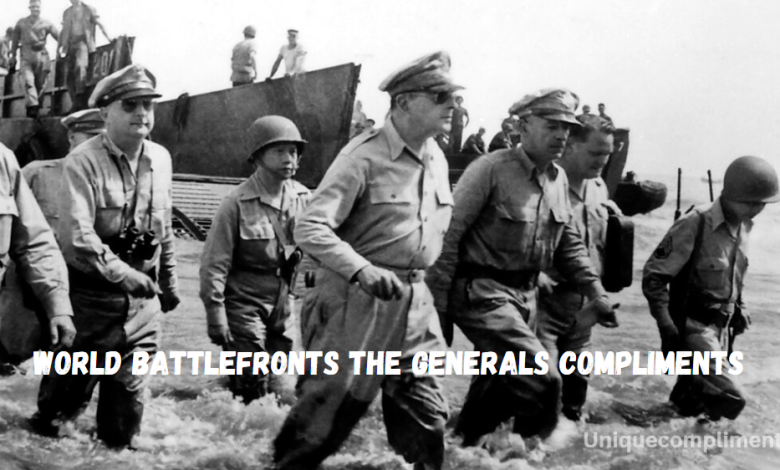
Another example comes from World War II, during the Battle of Cherbourg in June 1944, when Major General Manton S. Eddy of the United States Army stood near Octeville, overlooking the city. The Germans, led by General Karl Wilhelm Dietrich von Schlieben, had been defending Cherbourg fiercely. Yet, as their defenses crumbled and surrender became inevitable, the formality of military customs prevailed. Schlieben sent out a white flag and a formal message requesting that an officer be sent to facilitate the surrender process. In a moment of both military protocol and human exhaustion, Schlieben, a towering figure, appeared before General Eddy—flabby, mud-splattered, and in visible despair.
The scene illustrated not just a tactical surrender but also the remnants of honor between opposing generals. Despite the fact that Schlieben’s forces had been overwhelmed, the formality of his surrender—following the proper etiquette of a defeated officer addressing a victor—highlighted the deeply ingrained military codes that have governed wartime conduct for centuries. General Eddy, ever the professional, accepted the surrender with the respect expected of a military leader, embodying the importance of maintaining decorum even in moments of victory.
The Symbolism Behind Military Courtesies
The exchange of compliments between generals on the battlefield is often about more than just respect—it is a symbol of the larger principles that govern military leadership. First, it speaks to the concept of “chivalry” in warfare, which, despite being viewed as an idealistic notion in modern combat, still holds sway among many military leaders. Chivalry suggests that even in the most brutal conflicts, there is room for dignity, honor, and respect for the opposing side.
Second, these moments reinforce the idea of professionalism in military leadership. The role of the general is not just to lead soldiers into battle but to conduct themselves in a way that reflects the integrity of their nation or cause. The “compliments” exchanged, whether they are salutes or written messages, serve as a reminder that leadership in war is not just about strategy and victory; it is also about maintaining a standard of conduct that sets an example for others.
Finally, these gestures highlight the humanity of those who fight. In the midst of the bloodshed, generals are often confronted with the same struggles as their soldiers—fatigue, doubt, the burden of responsibility. The formality and respect exchanged between generals acknowledge the everyday challenges of leadership and provide a brief respite from the chaos of war.
Frequently Asked Questions
What does “The General’s Compliments” refer to?
The General’s Compliments refer to moments of formal courtesy and respect exchanged between opposing military leaders, even in the midst of conflict. These exchanges can take the form of salutes, messages, gestures, or polite requests during times of surrender, truces, or ceasefires. Despite the brutality of warfare, these acts highlight the professionalism, honor, and sometimes humanity between commanders on the battlefield.
Why would generals exchange compliments during the war?
Generals, while leading their forces in battle, are often bound by military tradition, respect for rank, and professional courtesy. These exchanges are a symbol of the chivalric code, the professional responsibility of leaders, and a recognition that war, despite its brutality, should still be governed by certain codes of conduct. Compliments are also a way of acknowledging the opposing general’s leadership and the shared burden of command.
How do “The General’s Compliments” show humanity in warfare?
While warfare is often seen as a brutal, dehumanizing process, moments like “The General’s Compliments” remind us that, even in the face of tremendous violence and suffering, there is room for mutual respect. These exchanges offer a glimpse into the personal toll that war takes on military leaders and their recognition of one another’s challenges, as well as their shared responsibility for the lives of their troops.
Are these moments of courtesy common in all wars?
The tradition of “The General’s Compliments” has appeared in many wars, but their frequency and formality depend on the nature of the conflict. In highly regulated or conventional wars, such as the Napoleonic Wars, World Wars I and II, and the American Civil War, acts of courtesy were more common due to established military codes of conduct. In modern warfare, where combat is often faster and more chaotic, such exchanges may be rarer but still occur in moments of truce, ceasefire, or surrender.
Do these courtesies imply that generals are friends or allies?
No, these exchanges do not imply friendship or alliance. They are formal gestures of respect for each other’s leadership and professionalism. Generals may exchange compliments even when they are enemies on the battlefield. These acts recognize the shared burden of command and the acknowledgment that both leaders are following the same code of military conduct, even as they fight for opposing causes.
Are “The General’s Compliments” always a sign of defeat or surrender?
Not necessarily. While many famous instances of such compliments occur during surrenders or moments of cessation in fighting, they can also occur in other contexts. For example, they may happen during peace negotiations, truces, or following a particularly brutal battle where one side acknowledges the valor of the other. They are gestures that transcend immediate conflict, reflecting a mutual understanding between military leaders.
Do generals always respect military etiquette, even in desperate circumstances?
Yes, even in dire circumstances, many generals adhere to military etiquette, as it is deeply embedded in military tradition. These formalities serve not only as a mark of professionalism but also as a means of maintaining order and dignity during a chaotic and often dehumanizing process. However, there are exceptions, particularly in less conventional wars or when one side refuses to recognize the legitimacy of the opposing general’s authority.
Conclusion
The concept of “The General’s Compliments” reveals an often overlooked yet profound aspect of warfare—moments of respect and humanity that persist even amid the chaos and violence of battle. While war is inherently destructive, these formal courtesies between opposing military leaders illustrate that, even in the harshest of conditions, certain principles endure. They reflect the professionalism, dignity, and honor that military leaders are expected to uphold, not just for their troops but also in relation to their adversaries.
These exchanges are more than just symbolic gestures; they are reminders that leadership in war is not solely about victory and defeat but about how those victories and defeats are conducted. Whether through formal letters, salutes, or polite gestures during surrender, “The General’s Compliments” highlights the shared burdens and responsibilities of command, emphasizing the idea that even in war, respect for one’s enemy is a mark of authentic leadership.