
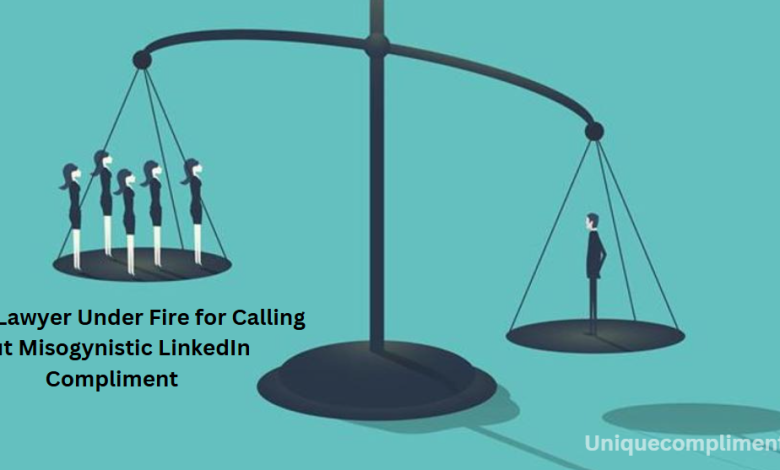
A young female lawyer in the U.K. has faced intense criticism after publicly calling out a senior attorney for commenting on her LinkedIn photo.
The incident began when Charlotte Proudman, a 27-year-old barrister, sent a connection request to Alexander Carter-Silk, a 57-year-old senior solicitor. In response, Carter-Silk messaged her, commenting on her “stunning picture” and saying it would “definitely win the prize for the best LinkedIn photo I have ever seen.” Proudman, who found the comment inappropriate, responded that it was an example of “unacceptable and misogynistic behavior.” She explained that focusing on her appearance detracted from her professional attributes and shifted attention to her looks instead of her qualifications.
The Backlash
Proudman then took to Twitter to share the exchange, which sparked a wave of backlash. She was branded a “Feminazi” on the cover of the Daily Mail, trolled on social media, and even warned by colleagues that speaking out could ruin her career.
In a column for the Daily Mail, journalist Sarah Vine downplayed the incident, arguing that Carter-Silk’s comment was harmless, noting it was a “compliment” that took place in an online context, not in person. “If this is what counts as ‘objectification’ and ‘misogyny’ these days, then the human race is in deep trouble,” Vine wrote.
The Professional Context
The professional context of the incident is significant: in the U.K., barristers like Proudman are legal advocates, specializing in courtroom litigation, while solicitors like Carter-Silk are legal practitioners who often hire barristers to represent clients. For a barrister, professional relationships with solicitors are crucial, making comments like Carter-Silk’s more impactful. Furthermore, women remain underrepresented in the legal profession, with significantly fewer female barristers than male ones.
May you also like it:
Lilly Singh Why It’s So Important to Compliment Other Women
How to Give Meaningful Parenting Compliments That Encourage and Empower
Donald Trump Calls Putin Compliment a ‘Great Honor’
Proudman’s Response
Proudman later addressed the controversy in an interview with the Evening Standard, clarifying that she is not a “man-hating feminazi,” but a feminist who wants to highlight and challenge sexist behavior. She emphasized that seemingly small acts of sexism, like the LinkedIn comment, can accumulate and contribute to a hostile working environment, especially for women in male-dominated fields like law. “There is a continuum between receiving a sexist message on LinkedIn and being discriminated against in the workplace,” she said. “It has a huge, profound effect on women’s career opportunities.”
Proudman added that she initially considered deleting the message but chose to speak out after discovering that Carter-Silk was a partner in a law firm with professional responsibilities. She found it especially concerning that a senior figure in the legal profession would perpetuate such behavior.
Carter-Silk’s Response
In response to the fallout, Carter-Silk has remained mainly out of the public eye. Still, he did offer a statement to a legal blog, insisting that his comment had been intended as praise for the professional quality of Proudman’s LinkedIn photo and that it was “unfortunately misinterpreted.”
Frequently Asked Questions
What happened between Charlotte Proudman and Alexander Carter-Silk?
Charlotte Proudman, a 27-year-old barrister, sent a connection request on LinkedIn to Alexander Carter-Silk, a 57-year-old senior solicitor. Carter-Silk responded with a message complimenting Proudman on her “stunning picture,” saying it would “definitely win the prize for the best LinkedIn photo I have ever seen.” Proudman found this comment inappropriate and responded that it was an example of “unacceptable and misogynistic behavior,” arguing that focusing on her appearance detracted from her professional abilities. She then shared the exchange on Twitter.
Why did Charlotte Proudman think the comment was misogynistic?
Proudman believed that commenting on her physical appearance, rather than her professional qualifications, reduced her to her looks and undermined her expertise. She argued that such comments perpetuate a broader issue of sexism in professional environments, particularly in male-dominated industries like law, where women often face additional hurdles. Proudman saw the comment as part of a pattern that silences women’s professional attributes.
What was the public reaction to Proudman’s tweet?
Proudman’s tweet about the incident led to a wave of backlash. She was widely criticized, with some calling her a “Feminazi” in the media. The Daily Mail ran a headline that mocked her stance, and she faced online trolling. Colleagues in the legal field reportedly warned her that speaking out publicly could harm her career, adding to the pressure she faced.
How did the media respond to Proudman’s actions?
Some media outlets, like the Daily Mail, were critical of Proudman, with journalist Sarah Vine dismissing the comment as harmless and arguing that it wasn’t serious enough to be considered objectification or misogyny. Vine suggested that if this was the extent of sexism being called out today, society was in trouble. However, other supporters argued that Proudman was right to speak out, emphasizing that everyday instances of sexism, like inappropriate comments on LinkedIn, contribute to a culture of discrimination that affects women’s careers.
What’s the significance of the professional context in this case?
The context of the legal profession is crucial. Barristers like Charlotte Proudman are specialists in courtroom advocacy and rely on professional relationships with solicitors like Carter-Silk. As a senior solicitor, Carter-Silk’s comment was especially problematic because he held a position of authority and had a duty to maintain professional conduct. Proudman’s decision to call out the comment was not just about a personal slight, but about addressing systemic sexism within a profession where women are still underrepresented, with fewer female barristers than male ones.
How did Charlotte Proudman respond to the backlash?
In interviews, Proudman defended her actions, clarifying that she is not a “man-hating feminazi” but rather a feminist who wants to expose and challenge everyday sexism in the workplace. She stressed that small, seemingly innocent acts of sexism—like the LinkedIn comment—can contribute to larger issues, making women feel uncomfortable or excluded in male-dominated professions. She also emphasized that, had she not called out the behavior, it could have escalated into more severe forms of discrimination.
What did Alexander Carter-Silk say about the incident?
Carter-Silk, who faced widespread criticism after the incident, largely avoided public comment. However, he did offer a statement to a legal blog, where he explained that his comment was meant to praise the professional quality of Proudman’s LinkedIn photo. He insisted that it was a compliment, and that it was “unfortunately misinterpreted” as an inappropriate comment.
What are the broader implications of this incident?
This case highlights the ongoing issue of sexism in professional environments, particularly in industries like law, where women are often underrepresented. It also raises questions about the fine line between compliments and objectification in the workplace, especially on social media platforms like LinkedIn. Proudman’s decision to speak out reflects the importance of addressing even small instances of sexism, as they can have a significant impact on women’s career opportunities and work environments. The backlash she faced underscores the challenges that many women still face when challenging inappropriate behavior in the workplace.
Conclusion
The incident involving Charlotte Proudman and Alexander Carter-Silk serves as a powerful reminder of the persistent sexism that women face in the workplace, even in seemingly minor or “harmless” interactions. Proudman’s decision to publicly call out what she viewed as an inappropriate, misogynistic comment on LinkedIn highlights the fine line between compliments and objectification, especially in professional settings.
While the backlash against Proudman reveals the challenges many women face when challenging everyday sexism, it also underscores the need for continued dialogue about gender equality in the workplace. Her stance—calling attention to even small acts of discrimination—emphasizes the broader systemic issues that women face, particularly in male-dominated professions like law, where such behavior can contribute to feelings of discomfort and exclusion.