The interplay of politics and religion has long been a cornerstone of American governance, often celebrated as a hallmark of pluralism and freedom. However, during Donald Trump’s presidency, this relationship took a dramatic and troubling turn as his administration leaned heavily into theocratic tendencies. His Cabinet, filled with religious hardliners and political loyalists, fostered a culture of “worship”—not just of Trump himself but of a specific brand of Christian nationalism. This alarming shift serves as a cautionary tale of how authoritarianism and religious fervor can intertwine to undermine democracy.
The Cult of Personality and Faith
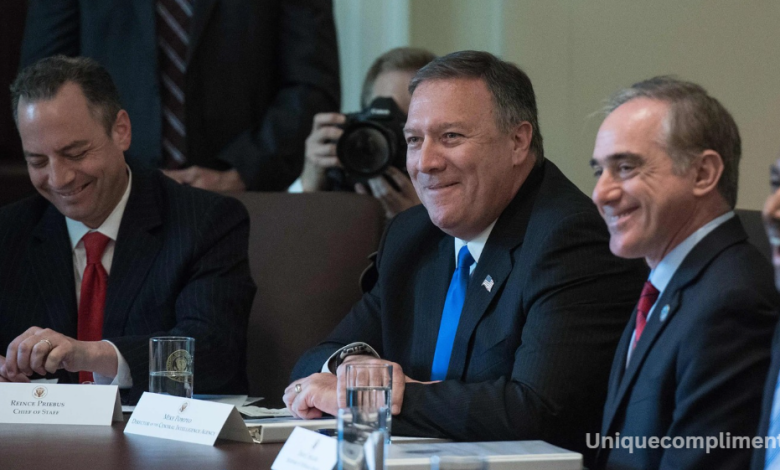
Trump’s leadership style relied heavily on creating a cult of personality. His administration often blurred the lines between governance and adulation. Members of his Cabinet, including figures like Mike Pompeo, Betsy DeVos, and Ben Carson, were not only staunchly loyal to Trump but also fervent believers in intertwining their faith with public policy.
Pompeo, a self-described evangelical Christian, often spoke about his belief that Trump’s presidency was divinely ordained. DeVos, a long-time advocate for Christian education, pushed for policies that eroded the separation of church and state, including funding religious schools with taxpayer dollars. These figures, among others, championed policies that prioritized their religious convictions over pluralistic values, often to the detriment of marginalized communities.
Christian Nationalism on the Rise
The Trump administration’s embrace of Christian nationalism represented a profound shift in American politics. Rather than serving as a unifying force, religion became a tool to polarize and consolidate power. Christian nationalism, with its emphasis on the United States as a divinely chosen nation, aligns disturbingly well with authoritarian tendencies.
Trump himself may not have been overtly religious, but he adeptly leveraged this ideology to galvanize his base. Public displays of prayer and overt references to Christian scripture during Cabinet meetings blurred the lines between personal faith and government policy. These acts symbolized a government that increasingly conflated religious identity with national identity, marginalizing those who did not conform.
The Erosion of Democratic Norms
One of the most alarming aspects of Trump’s Cabinet of worship was its impact on democratic norms. The administration’s frequent use of religious rhetoric to justify policies—such as family separation at the border or restrictions on LGBTQ+ rights—undermined the principles of equality and secular governance.
Moreover, this fusion of faith and politics fostered a dangerous us-versus-them mentality. Political opponents were often framed not just as adversaries but as enemies of a God-ordained mission. This rhetoric eroded the possibility of bipartisan dialogue and deepened divisions within the country.
A Warning for the Future
The legacy of Trump’s Cabinet of worship extends far beyond his presidency. It has emboldened a faction of the Republican Party that continues to push for theocratic policies and a vision of America rooted in exclusionary religious ideals.
This trend is not just a political concern; it is a cultural and social one. As the United States grapples with increasing diversity, the rise of Christian nationalism poses a direct threat to the principles of inclusion and equal representation.
Frequently Asked Questions
What is meant by “Trump’s Cabinet of Worship”?
The term “Cabinet of Worship” refers to the unique dynamic within Donald Trump’s administration, where Cabinet members and advisors often exhibited an almost reverential loyalty to him, combined with a heavy infusion of Christian nationalist rhetoric. It describes a leadership style that elevated Trump as a quasi-divine figure and promoted a vision of governance intertwined with specific religious ideologies.
How did religion influence Trump’s Cabinet?
Trump’s Cabinet included prominent figures with strong evangelical Christian beliefs, such as Mike Pompeo and Betsy DeVos. Their faith influenced policy decisions, often prioritizing religious ideology over secular governance. Examples include efforts to fund religious schools, limit reproductive rights, and oppose LGBTQ+ protections. These actions reflected a push to align U.S. governance with a particular brand of conservative Christianity.
Was Donald Trump himself religious?
Donald Trump did not exhibit strong personal religiosity and was often criticized for his lack of familiarity with Christian teachings. However, he effectively used religious symbolism and rhetoric to appeal to his evangelical base. By aligning himself with Christian nationalist ideals, he secured the unwavering support of a significant segment of the population.
What is Christian nationalism, and how did it manifest during Trump’s presidency?
Christian nationalism is an ideology that merges Christianity with national identity, often asserting that the United States is a divinely chosen nation. Under Trump, this ideology manifested in policies and rhetoric that marginalized non-Christian groups, promoted the idea of America as a “Christian nation,” and justified controversial policies as part of a divine mission.
Why is this considered a sign of American collapse?
The “collapse” refers to the weakening of foundational democratic norms, such as secular governance, equal representation, and political pluralism. The rise of religious authoritarianism under Trump undermined these principles, creating an environment ripe for polarization, exclusion, and the erosion of civil liberties.
What lessons can be learned from this era?
The Trump era underscores the importance of vigilance in protecting democratic norms. It highlights the dangers of conflating political leadership with religious mission and serves as a reminder that diversity and inclusion are essential for a thriving democracy.
Is this issue unique to the U.S.?
While Christian nationalism is particularly influential in the U.S., the blending of religion and authoritarianism is a global phenomenon. Similar dynamics can be seen in countries like Hungary, Turkey, and India, where leaders have used religious identity to consolidate power and marginalize dissenting voices.
Conclusion
Trump’s Cabinet of Worship represents a troubling chapter in American history, where political power and religious fervor merged to erode the principles of secular governance and democratic norms. The administration’s embrace of Christian nationalism and theocratic tendencies prioritized ideology over inclusivity, undermining the pluralistic values upon which the United States was founded.
This dynamic not only deepened societal divisions but also posed long-term threats to equality, civil liberties, and the separation of church and state. By elevating loyalty and religious identity over competence and constitutional principles, the Trump administration created a dangerous precedent for future governance.