
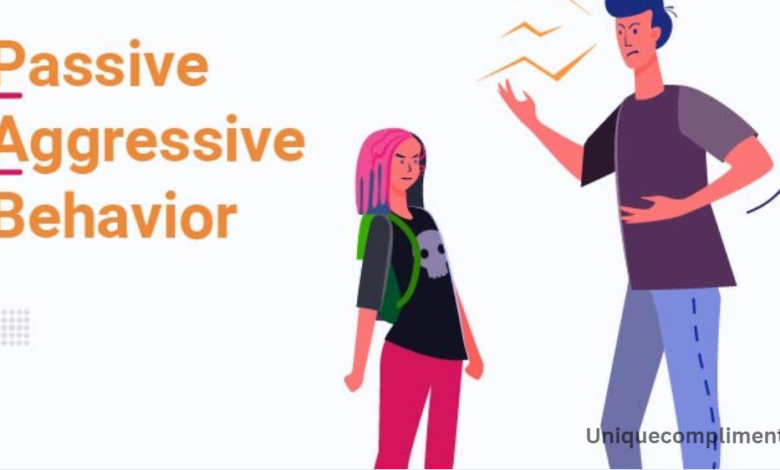
Human aggression, whether in the form of war, a bar fight, or a playground altercation, typically stems from a tendency to strike first and engage in dialogue later. While aggression is rarely productive, it does have one key advantage: clarity. A missile launch or a punch to the face is difficult to misinterpret.
Passive aggression, however, is a different beast. This subtle, indirect form of hostility is often far more challenging to identify. It’s aggression in disguise—there but not there, evident yet elusive. You might encounter it in the colleague who avoids a direct confrontation but subtly excludes your name from an important email thread. Or in a partner who, typically punctual, drags their feet when it’s your turn to choose the movie. While there may sometimes be innocent explanations, passive aggression often lingers beneath the surface—and the person exhibiting it may not even be fully aware of their behavior.
This form of indirect aggression is more than just an occasional frustration caused by certain individuals. Mental health professionals differ on whether passive-aggression should be classified as a personality disorder in the same category as narcissism or paranoia, but they agree on the defining characteristics: intentional inefficiency, a reluctance to take responsibility, and an inability or unwillingness to express needs and concerns openly.
Passive-aggressive behavior exists on a spectrum, making it difficult to pinpoint whether you’re dealing with a passive-aggressive individual—or if you yourself are engaging in passive-aggressive tendencies. The hallmark of this behavior is its plausible deniability: actions that can be interpreted in multiple ways, leaving no clear proof of malice.
Below are seven of the most common signs of passive-aggressive behavior, which might be present in your personal or professional life—whether from others or even yourself.
Leaving Things Unfinished
Passive aggressors excel at the art of the almost completed task. The room gets painted, but the molding remains untouched. The laundry gets washed but never folded. The dishwasher is loaded—except for the utensils, because who really needs clean forks and spoons when you’ve got a drawer full of half-broken chopsticks and fondue forks from 1997? (Not that I’ve ever seen this happen at home, of course.) This is a classic passive-aggressive move: leaving just enough undone to leave you feeling petty for pointing it out, forcing you to finish it yourself—again. (And, no, I’ve never personally experienced that either.)
Chronic Lateness
If you’re a passive-aggressor, time operates in a different dimension. A few minutes can stretch into hours, and deadlines are more like suggestions. Forget about wearing a watch; passive-aggressors view punctuality as optional. If they’re resentful about attending an event, they might accept the invitation and then “accidentally” forget the time, showing up halfway through the evening. The same applies at work—showing up late to a meeting with a confused look as if everyone else is the early one. Whether deliberate or unconscious, it’s a technique that’s undeniably effective at creating tension.
The Backhanded Compliment
Compliments are a social courtesy, but passive-aggressors tend to turn them into thinly veiled digs. Instead of “Nice haircut!” they’ll say, “Nice haircut—I had the same one in college.” Or instead of “Great soup!” it’s “Terrific soup—I didn’t even taste all that cilantro.” If you’re unsure whether you’ve received a compliment or a backhanded insult, check how it makes you feel. If you’re inclined to say “thank you,” it’s probably sincere. If you feel the urge to run for the hills, you’ve likely encountered a passive-aggressive comment.
Silence as a Weapon
Ever encountered someone upset with you but just… doesn’t say anything? That’s the passive-aggressive tactic of silence, and it’s incredibly effective. Rather than voicing their displeasure directly, a passive-aggressive person will leave you in the dark, giving you nothing to work with—yet everything to worry about. It’s a tactic that avoids conflict while still provoking it, as the silence speaks volumes without uttering a word. Clever, right? Passive, yet undeniably aggressive.
May you also like it:
World Battlefronts The Generals Compliments
World Battlefronts: The Generals Compliments
Hong Kong – With His Majesty Compliments
Wistful Wishing
“I wish you could finish the project by Wednesday, but I guess it’ll have to wait until Friday…” That’s the passive-aggressive wish: stating a desire and immediately disqualifying it. It’s a tactic that deflects responsibility, putting the onus on you while subtly suggesting that the task might never get done. The result is a perfect blend of suggestion and avoidance, leaving the passive-aggressor free from any direct responsibility for the outcome.
Sabotage, Light
While most of us can spot a villain in a movie—typically the one who tampers with the hero’s brakes or sneaks lousy code into the system—passive-aggressors can be just as sneaky, albeit in more subtle ways. Maybe your colleague forgets to mention that crucial deadline until it’s just a day away. Or your spouse tosses your delicate work clothes into the dry cleaner the day before your big trip—something you’d been arguing about for days. This kind of sabotage may not always be intentional, but it has the same effect: creating a problem without taking direct responsibility for it.
The Disguised Insult
Passive-aggressors have a unique social maneuver that allows them to say something mean or critical while hiding behind the illusion of politeness. They’ll preface their insult with qualifiers like, “I don’t want to sound rude, but…” or “I hope you don’t think I’m being insensitive, but…”—and then deliver the blow. This tactic is often followed by something like, “You’re going to hate this, but…” and, sure enough, you will. It’s an almost surgical way of delivering an insult while maintaining plausible deniability. They can’t be called out directly for being rude—because they said they didn’t want to be.
How to Cope with Passive-Aggression
If you find yourself on the receiving end of passive-aggression, remember: you’re not imagining things. Patterns of passive-aggressive behavior are authentic, and it’s essential to recognize them. The first step is to set clear boundaries. If someone consistently shows up late to dinner, invite them with the understanding that they need to honor the agreed-upon start time. If they fail again, it’s perfectly acceptable to stop inviting them.
What if You’re the Passive-Aggressor?
If you suspect you might be the one engaging in passive-aggressive behavior, start by acknowledging it. It’s not easy to break the habit, but becoming more direct in your communication is a good first step. If you struggle with this, a therapist or counselor can help you uncover the reasons why directness feels so difficult. Although it takes time and effort, being more straightforward is a lot less exhausting than trying to mask your feelings with indirect tactics. Plus, it’s far more rewarding in the long run.
Frequently Asked Questions
What does “passive-aggressive” mean?
Passive-aggressive behavior refers to indirect expressions of hostility, where someone shows their anger, frustration, or resentment in subtle, often disguised ways. Rather than confronting an issue directly, the person might use avoidance, procrastination, sarcasm, or backhanded compliments to express negative feelings without openly addressing the problem.
Is passive-aggressive behavior a personality disorder?
While passive-aggressive behavior is not formally classified as a personality disorder, it can be a feature of certain disorders, such as Passive-Aggressive Personality Disorder (PAPD). However, most people occasionally exhibit passive-aggressive tendencies without having a personality disorder. It becomes problematic when it’s a persistent pattern that negatively impacts relationships or work.
Can passive-aggressive behavior be changed?
Yes, passive-aggressive behavior can change with self-awareness and effort. People who recognize their passive-aggressive tendencies can work to become more direct in their communication. Therapy, especially cognitive-behavioral therapy (CBT), can help individuals identify the root causes of their behavior and develop healthier, more direct ways to express their emotions.
Is passive-aggressive behavior always intentional?
Not always. While some passive-aggressors may act with intent, many engage in passive-aggressive behavior unconsciously. They might not fully realize how their actions affect others, or they might not have developed healthier coping mechanisms for dealing with conflict or frustration.
Can someone be passive-aggressive in one area of life but not others?
Yes, someone can show passive-aggressive behavior in certain situations or with specific people, but not across all areas of their life. For example, someone might be passive-aggressive with a partner but not with colleagues. This variability depends on the individual’s comfort level with confrontation and how they feel in different contexts.
Conclusion
Passive-aggressive behavior is a complex and often subtle form of indirectly expressing negative emotions. It typically manifests as avoidance, procrastination, sarcasm, backhanded compliments, silence, or sabotage, all of which serve as ways for individuals to express frustration, anger, or resentment without confronting the issue head-on. While passive aggression can be an occasional coping mechanism, it becomes problematic when it becomes a persistent pattern that negatively impacts relationships, whether personal or professional.
Understanding passive-aggressive behavior is crucial because it helps us identify its presence and its underlying causes, such as a fear of conflict, low self-esteem, or a learned response from childhood. Recognizing passive-aggressiveness—whether in ourselves or others—allows for more productive communication and healthier ways of addressing conflict.